

Extensions
Extend the BlueEnergy Simulation Library with specialized components for your energy system applications.
Specialized Simulation Libraries
Extend Your Modeling Capabilities
The BlueEnergy Simulation Library covers a broad range of energy system applications. For projects that require more specialized functionality, dedicated extensions expand its capabilities with models and components for specific technical challenges.
These extensions cover hydrogen systems, district heating networks, indoor air control, thermodynamic machines and steam systems. Explore the libraries below to find the capabilities that match your project requirements.
Hydrogen Systems Library
Design and Evaluate Hydrogen Energy Systems
How can surplus renewable electricity be used efficiently? And how can hydrogen production, storage, conversion and consumption be coordinated effectively?
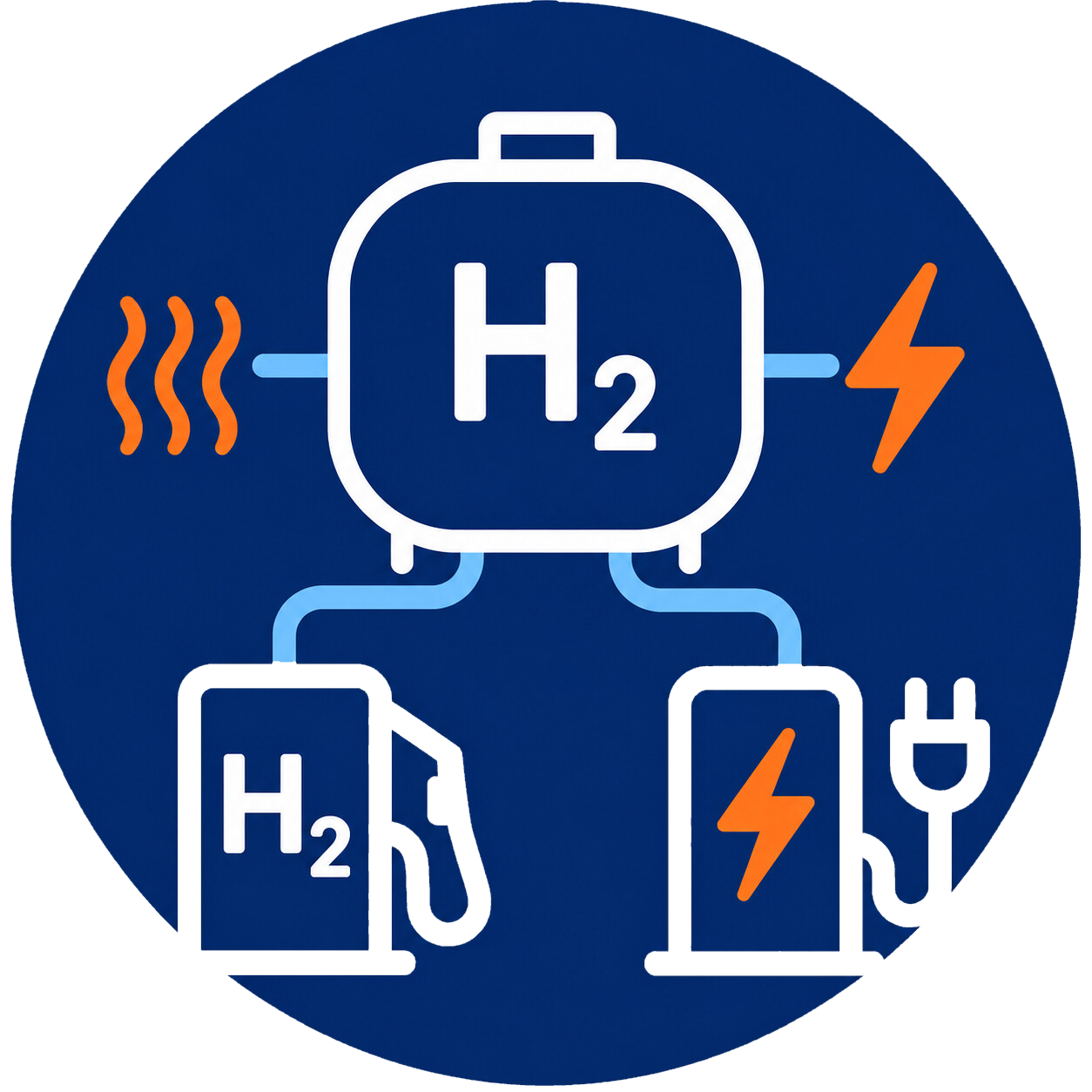
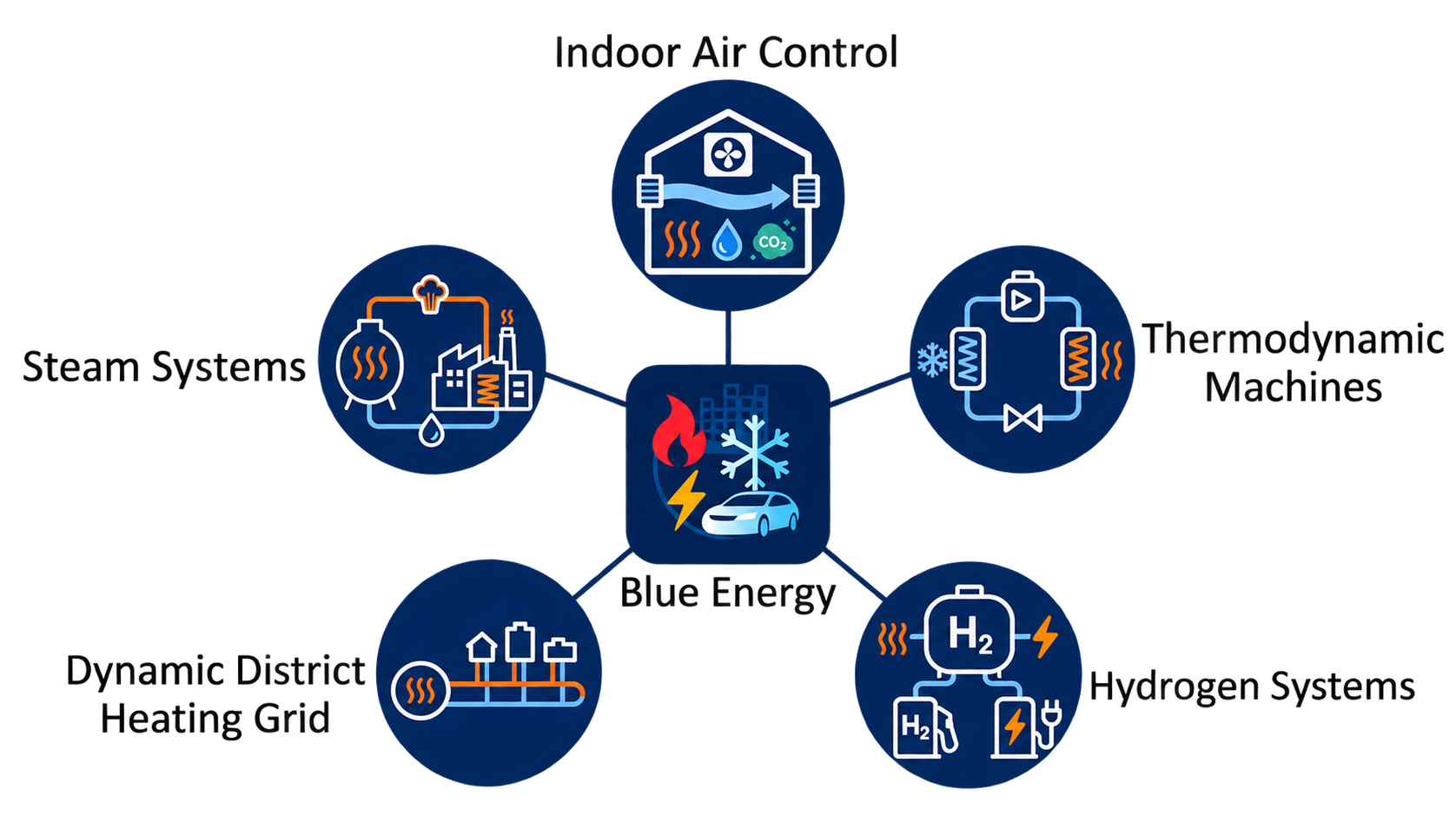
The Hydrogen Systems Library addresses these challenges by providing Modelica components for the dynamic simulation of hydrogen-based energy systems.
With this library, users can model electrolysers, fuel cells, hydrogen storage systems, hydrogen charging infrastructure and electric charging infrastructure within one integrated simulation environment. This makes it possible to analyze how hydrogen is produced, stored, converted and consumed under changing operating conditions.
The library is especially useful for evaluating sector-coupled energy concepts where hydrogen and electricity systems are closely linked. It supports the assessment of system behavior, infrastructure requirements and operational strategies before implementation in real energy systems.
Dynamic District Heating Grid Library
Design and Optimize District Heating Networks
How can complex district heating networks be better understood? And how will new consumers, producers, storage systems, renewable technologies or changing grid temperatures affect their operation?
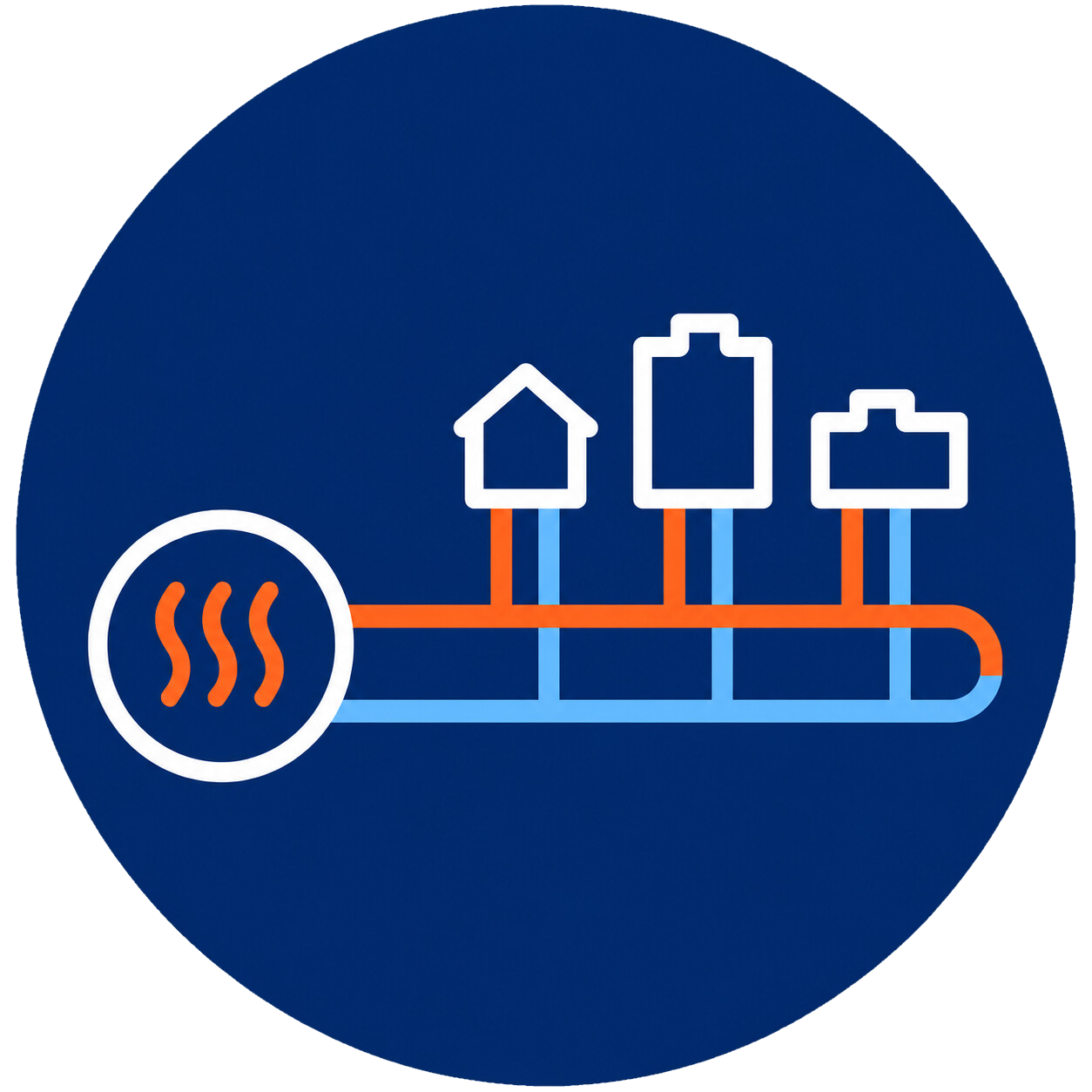
The Dynamic District Heating Grid Library addresses these challenges by enabling dynamic thermal and hydraulic simulation of district heating networks, supporting both the optimization of existing systems and the planning of future grid extensions.
With the library, users can analyze load flows, supply and return temperatures, hydraulic conditions and critical network areas. This helps identify bottlenecks, evaluate component dimensions and assess the impact of new connections or control strategies before they are implemented in the real system.
The library also supports complex supply concepts, such as multivalent feed-in, moving hydraulic zero points and the integration of heat pumps, thermal storage, CHP units, waste heat and renewable energy sources.
By combining detailed network simulation with broader energy system modeling, it provides a reliable basis for developing efficient, flexible and future-proof district heating systems prepared for decarbonization and the energy transition.
Indoor Air Control Library
Design and Optimize Indoor Air Quality
How can indoor air quality, humidity and CO₂ levels be effectively managed? And how can ventilation and control strategies be designed to provide optimal indoor conditions?
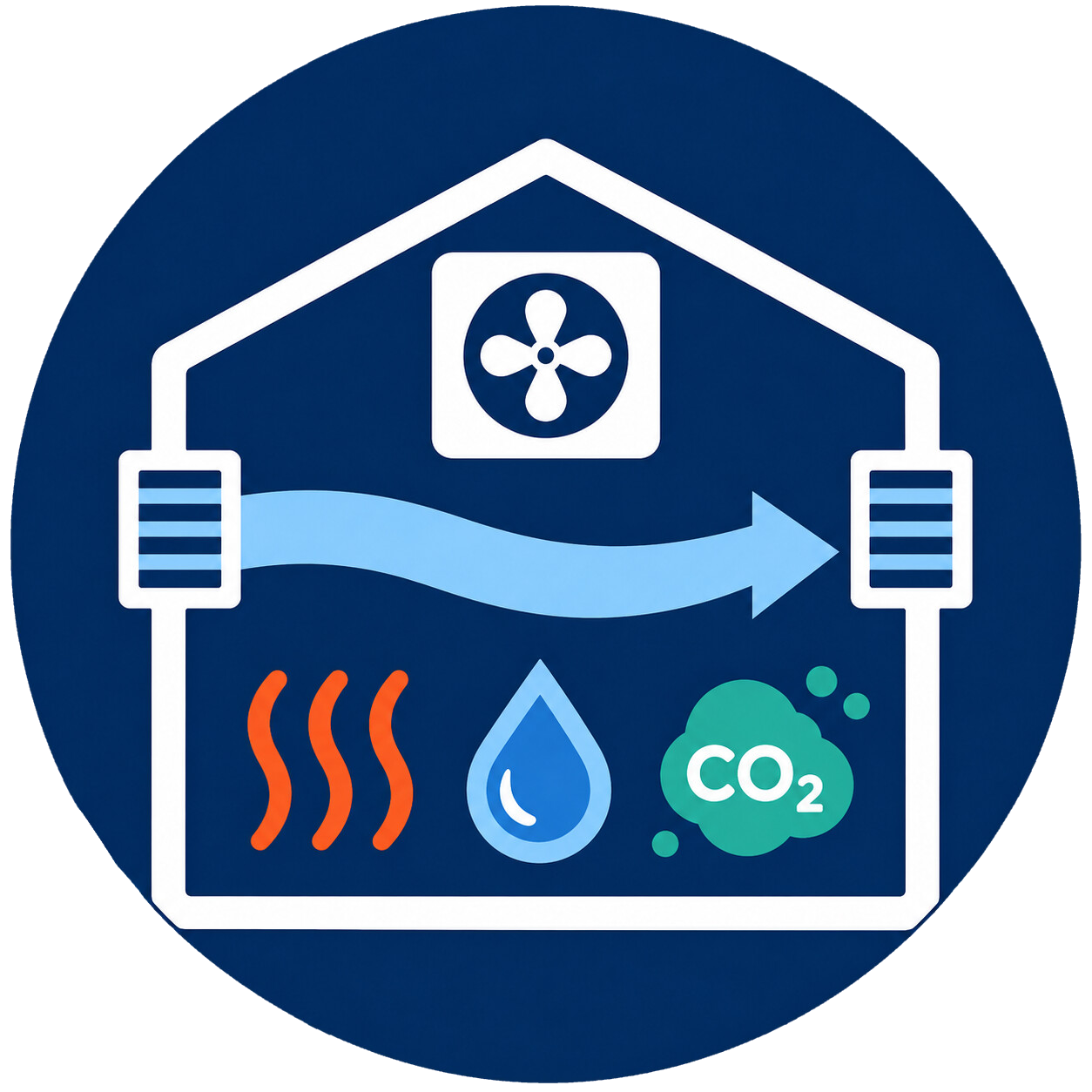
The Indoor Air Control Library addresses these challenges by providing Modelica components for the dynamic simulation of buildings, indoor air conditions and ventilation systems.
With this library, typical indoor loads caused by occupants, such as heat, moisture and CO₂, can be represented in detail. Extended models also allow additional moisture and CO₂ inputs from plants to be included, while dedicated pool models support humidity-intensive applications.
Ventilation systems can be modeled using components such as air inlets, air outlets, fans, overflow elements, window ventilation, duct elements, duct branches and duct junctions. In addition, air treatment processes such as heating, cooling, humidification, heat and moisture recovery and CO₂ supply can be simulated.
This makes it possible to analyze indoor climate, air quality, humidity behavior, ventilation strategies and air treatment concepts within integrated building energy systems. The library is therefore especially useful for designing and optimizing ventilation and control concepts before they are implemented in real buildings.
Thermodynamic Machines Library
Design and Optimize Refrigeration and Heat Pump Systems
How do compressors, expansion valves, heat transfer and air-side conditions interact dynamically? And how can refrigeration and heat pump systems be effectively controlled under changing operating conditions?
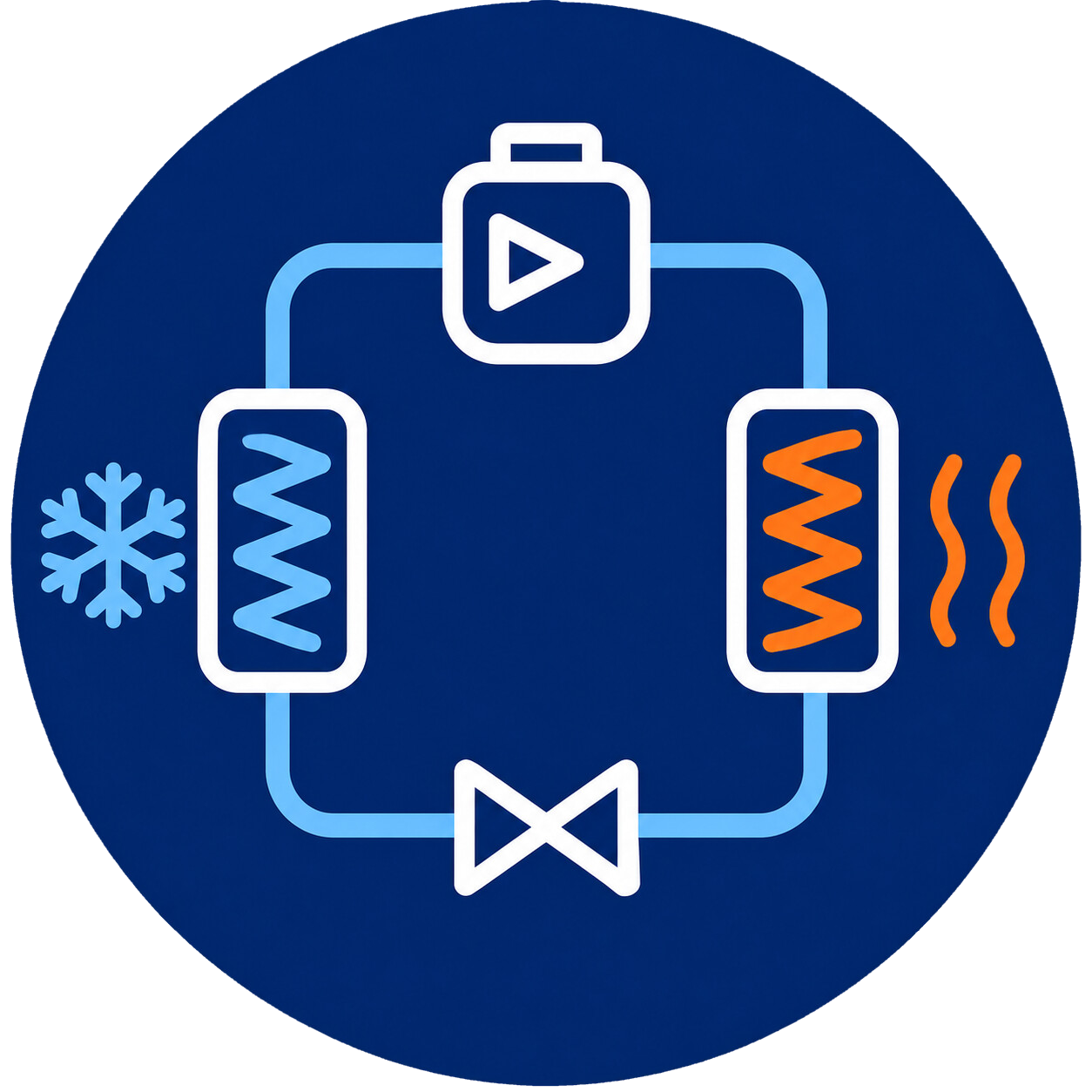
The Thermodynamic Machines Library addresses these challenges by extending the Indoor Air Control functionality with model components for the detailed simulation of direct expansion circuits.
With this library, refrigeration processes can be represented dynamically and directly connected to air handling and cooling applications. Components such as compressors, coolers, heaters, dry cooling towers, expansion valves and compressor controllers make it possible to analyze how individual machine components interact under changing operating conditions.
Beyond direct expansion cooling systems, the same modeling approach can also be applied to heat pump applications. This allows both cooling and heating operation to be evaluated within one consistent simulation environment.
The library is therefore especially useful for analyzing refrigeration circuits, heat pump systems, control strategies and their integration into building and ventilation energy systems before implementation.
Steam Systems Library
Analyze and Optimize Industrial Steam Systems
How can losses in industrial steam and condensate systems be identified and allocated effectively? And how can generation, distribution, pressure reduction and condensate recovery be optimized?
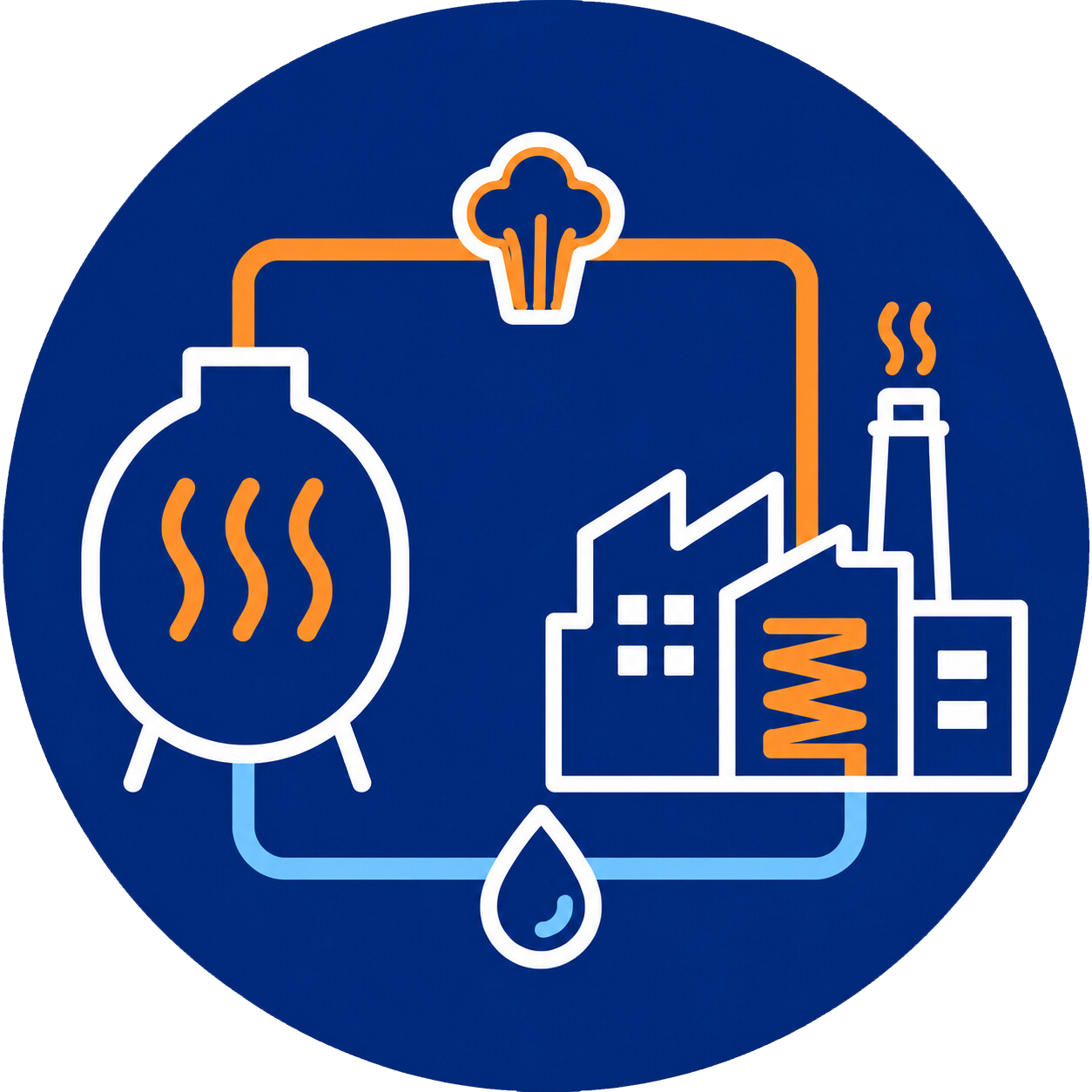
The Steam Systems Library addresses these challenges by providing Modelica components for the dynamic simulation of steam and condensate systems within integrated industrial energy systems.
With this library, complex steam distribution structures can be modeled using components such as steam pipes, steam pipe junctions, pressure reducing valves and condensate traps. On the generation side, control concepts for saturated steam regulation, condensate demand control and condensate pressure control can be represented.
For steam consumers, the library includes components such as heat exchangers and generic steam utilization models, allowing different steam demand structures to be analyzed. Additional options, such as variable mass flow distribution between steam generators and condensate flashing in pressure reducing valves, further increase modeling flexibility.
This makes the library especially useful for evaluating steam generation, distribution, pressure reduction, condensate recovery and steam consumption before changes are implemented in real industrial systems.
Your System. Your Requirements.
Custom Library
The BlueEnergy Library can also be extended to cover application-specific requirements beyond the standard component libraries. If a use case cannot be fully represented with existing models, we develop tailored components, system models or interfaces that match the technical requirements of the individual project. This may include specialized energy conversion processes, customer-specific control strategies, unique plant configurations, additional media or sector-coupled system concepts. By combining the existing BlueEnergy with custom-developed extensions, almost any energy-related application can be represented. This enables users to analyze, compare and optimize even highly specific systems within a consistent simulation environment.